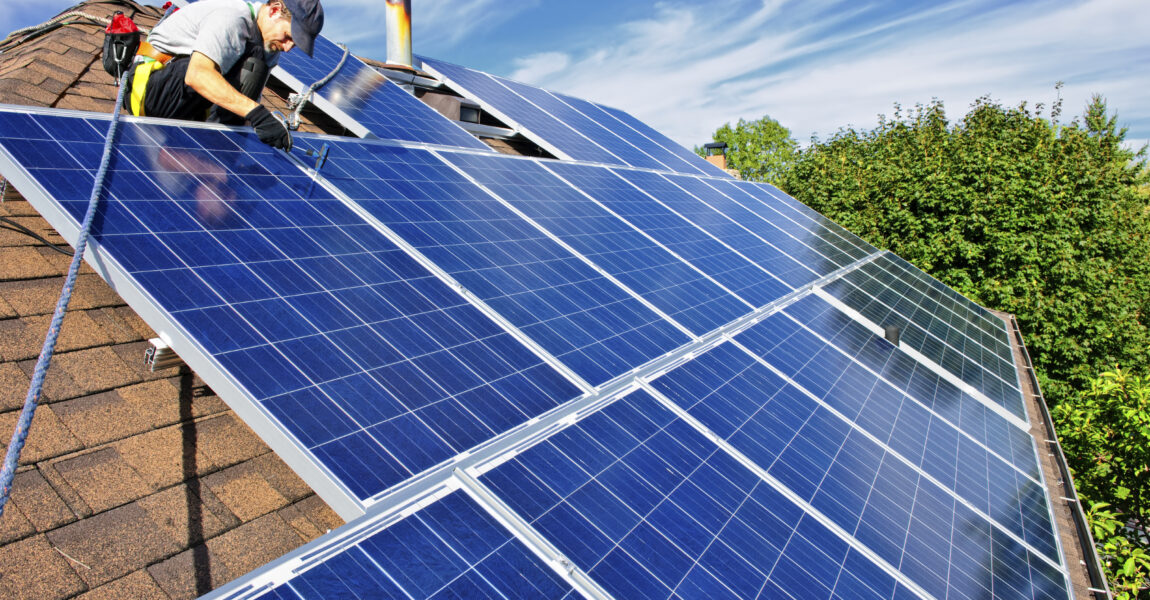
When thinking of generating solar energy on buildings, most people think of rooftop solar panels—the rectangular, glass modules placed neatly on top of people’s homes. But solar technologies include much more than just rooftop panels, and building-integrated photovoltaics, also known as BIPV, takes the panel off the roof and, for example, puts it inside the roof itself.
Different from the traditional rooftop solar market, BIPV is a set of emerging solar energy applications that replace conventional building materials with solar generating materials in various parts of a structure, like the roof, skylights, balustrades, awnings, facades, or windows. Perhaps the most common forms of BIPV are carports or parking shade structures with PV panels built directly into them.
By generating clean energy onsite rather than sourcing electricity from the local electric grid, solar energy provides certainty on where your energy is coming from, can lower your electricity bills, and can improve grid resilience and reliability, among the many environmental and financial benefits of solar energy. But there is more than one way to generate solar energy on a building and, in some cases, BIPV might make more sense than rooftop panels.
For example, some homeowners may have restrictive homeowner association rules that prohibit rooftop panels; certain commercial buildings may have roof weight limitations that rule out rooftop solar panels; and multi-story and high-rise buildings have much more exterior wall surface area than roof top area. In these cases, solar facades, parking structures, or awnings can be a great alternative to rooftop panels. Or maybe you just want to lounge under a solar awning on your net-zero home’s roof deck. In addition to the environmental benefit of generating your own electricity with solar energy, BIPV is an aesthetically pleasing, space-saving way for building owners to transition to renewable energy. On-building energy generation also reduces how much we need to invest in grid transmission and distribution infrastructure as our country transitions to all-electric buildings and vehicles, helping to keep energy prices affordable. (energy.gov)